

Description
Versatile Whole Pulse for Household & Institutional Cooking
Mung beans, commonly known as whole moong, are widely used due to their adaptability across cooking methods and preparations. Harvested at full maturity and dried under controlled conditions, whole moong retains its natural structure and mild flavor, making it suitable for daily meals as well as large-volume cooking.
Across households, restaurants, and institutional kitchens, mung beans are preferred for their predictable behavior during soaking and cooking. Their balanced texture supports consistent results in both quick-cook dishes and longer simmered preparations.
Grain Quality, Color & Visual Uniformity
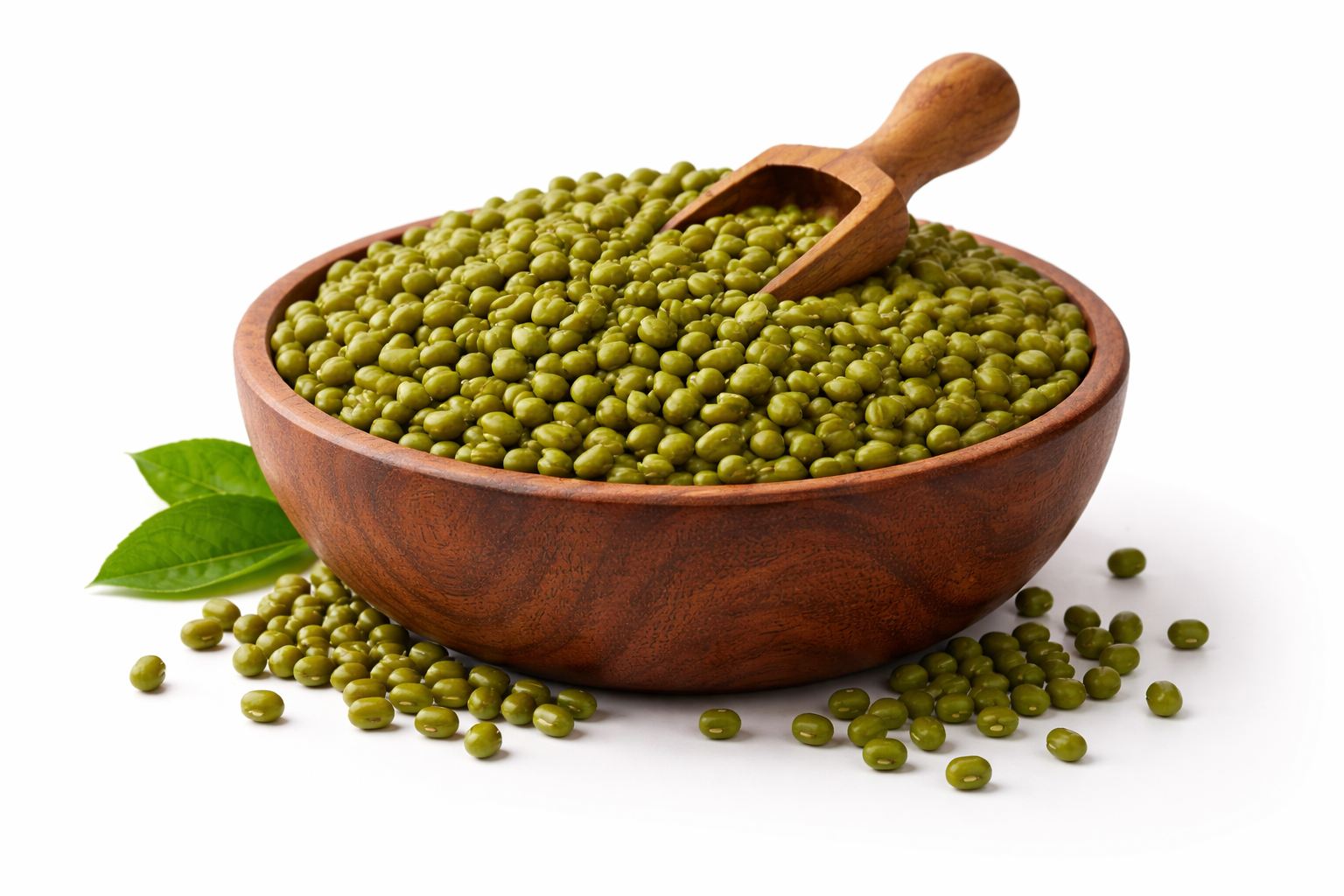
High-quality whole mung beans have a bright green outer skin with smooth, oval-shaped grains. Uniform grain size is essential, as it directly influences soaking time, hydration consistency, and final cooking texture.
Clean sorting minimizes broken grains and foreign matter, improving visual appeal and ensuring even cooking across batches.
Processing, Cleaning & Sorting Standards
Whole moong undergoes multiple stages of cleaning to remove dust, stones, and immature grains. Sorting and grading help maintain consistent grain size and density, which is critical for predictable cooking performance.
Proper drying and moisture control reduce the risk of spoilage during storage and transportation, supporting longer shelf life and stable quality.
Cooking Behavior & Bulk Performance
Mung beans typically require soaking before cooking, after which they soften evenly while retaining their shape. When cooked, they develop a tender yet structured texture that works well in both dry and gravy-based dishes.
In bulk cooking environments, mung beans deliver consistent yield and texture, supporting portion control and uniformity across large batches. Their performance remains stable in pressure cooking as well as open boiling.
Food Service, Sprouting & Processing Relevance
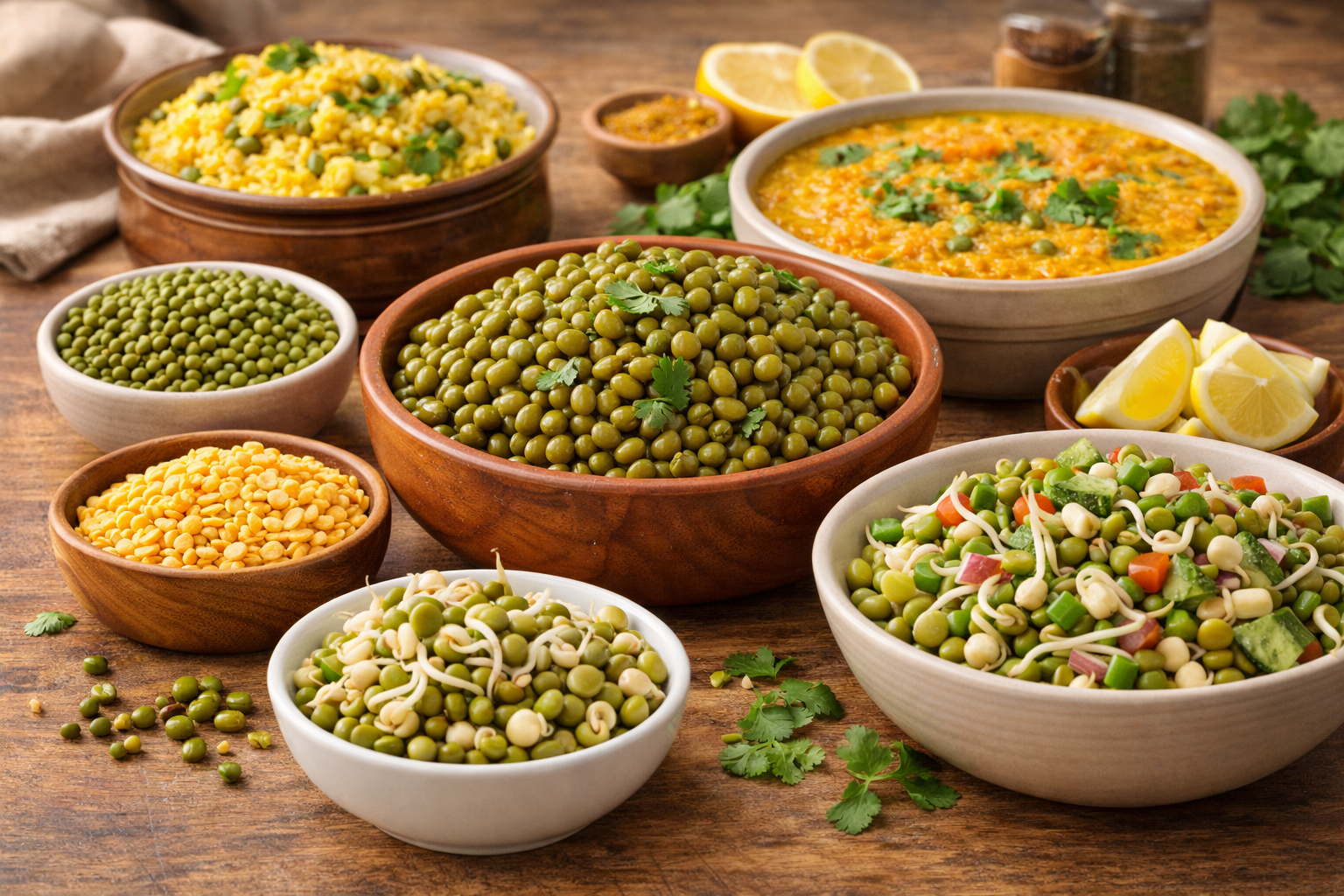
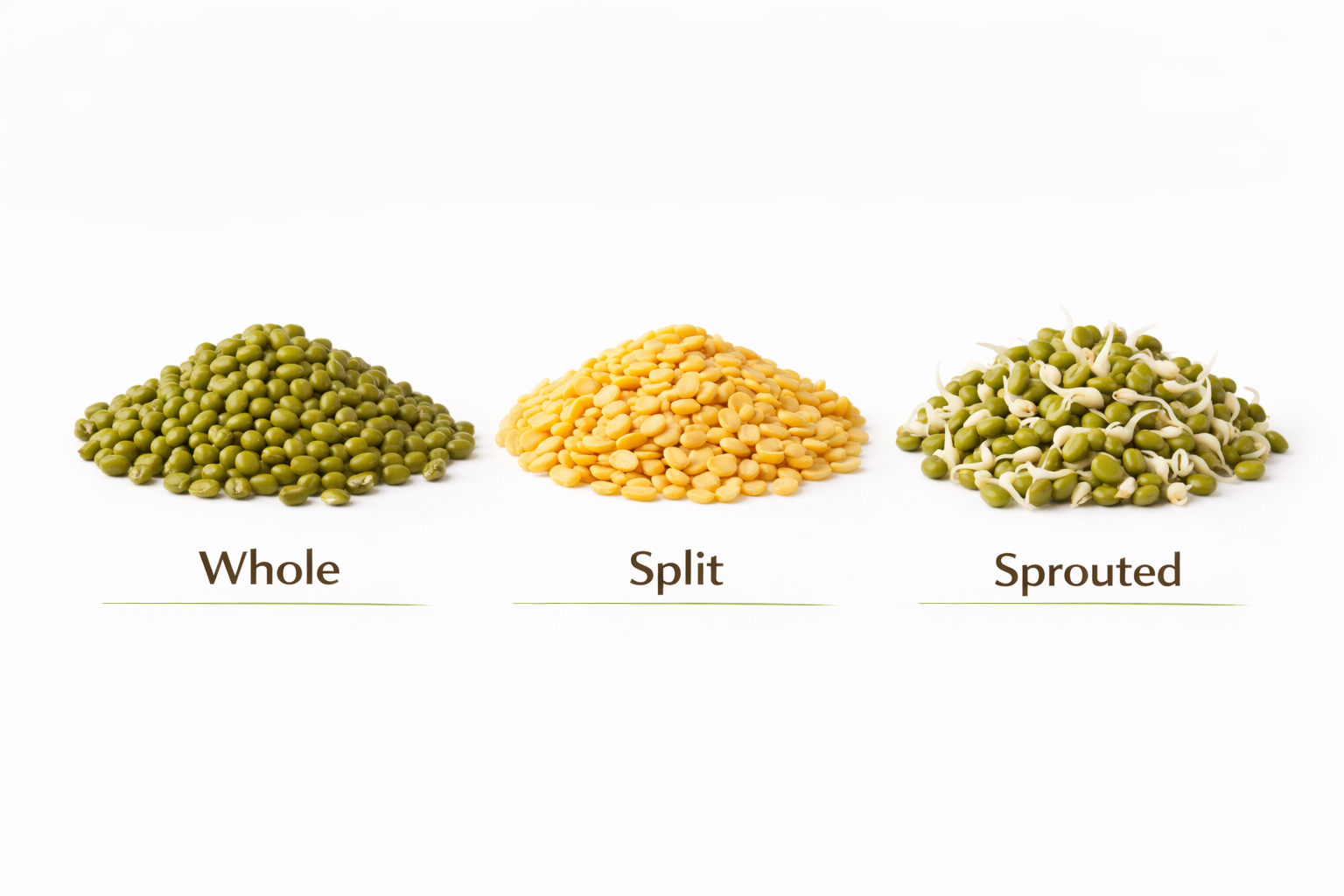
Whole mung beans are widely used in traditional dishes, salads, and institutional meals. They are also suitable for sprouting applications, where uniform grain quality and cleanliness are essential. In food manufacturing, mung beans are used in processed foods, blended pulses, and ready-to-cook formulations.


Reviews
There are no reviews yet.